

Omnichannel logistics has transformed the role of carriers. It's no longer enough to deliver pallets from a warehouse to a store—now, the same operator must handle online orders, home deliveries, in-store pickups, returns from drop-off points, and stock replenishment. All of this must happen in a coordinated way, with zero room for error.
This shift requires a complete rethink of how transportation is organized and what technological tools make it possible.
What does omnichannel logistics mean in practice?
Omnichannel logistics refers to the ability to manage orders and deliveries from different sales channels within a single logistics network. That means coordinating operations across physical stores, ecommerce platforms, marketplaces, and mobile apps, while offering the end customer a seamless experience, regardless of the channel they use.
For transportation companies, this isn’t just about adapting: it’s an opportunity to position themselves as strategic partners capable of navigating the growing complexity of modern commerce.
What does this mean for the transportation sector?
Implementing an omnichannel logistics strategy brings new logistical challenges:
- More dynamic routes with multiple types of deliveries in a single day.
- Smaller, more frequent orders.
- The need for real-time visibility and traceability for both customers and businesses.
- Increased pressure on delivery times and operational efficiency.
To handle this complexity, more and more operators are adopting TMS software comes in. that enables them to plan mixed routes, assign resources precisely, and adjust to channel-specific demand peaks. Integration with software for ecommerce is also essential to automate order intake and processing.
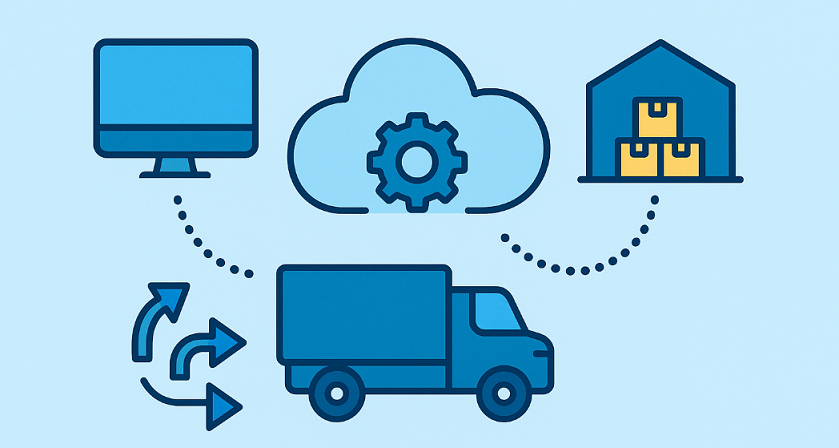
Key steps to implement omnichannel logistics successfully
Implementing an omnichannel strategy isn’t just about adding more sales channels—it’s about redesigning how orders, deliveries, and information flow through the entire chain. Here are the key building blocks to do it efficiently and in line with the challenges of modern transport.
Centralize Order Management
All orders, regardless of their origin, should be managed through a single, connected platform. This helps prevent duplication, stock errors, and unnecessary delays.
Plan Mixed Routes with Technology
It’s no longer just about going from point A to point B. Today, a single route may include deliveries to physical stores, homes, and pickup points. A TMS software allows these routes to be optimized by grouping orders from various channels without losing efficiency.
Real-Time Visibility
Both the customer and logistics managers need to know where an order is at any given time. This requires connected systems that continuously collect and share data.
Agile Returns Management
In an omnichannel environment, returns can be initiated from any channel. Integrating this process into logistics operations avoids bottlenecks and improves the customer experience.

Example: how a logistics operator applies omnichannel logistics
Let’s consider a logistics operator working with multiple clients who sell through various channels: physical stores, ecommerce platforms, marketplaces, and mobile apps. Instead of managing each channel separately, the operator integrates all orders into a single operation using TMS software connected to the clients’ systems.
Thanks to this setup, the operator can:
- Consolidate orders from different channels into combined routes, grouping deliveries to stores, homes, and pickup points in the same day.
- Optimize daily planning, adjusting automatically to the demand of each channel by time, date, or volume.
- Reduce mileage and vehicle useby avoiding duplicate trips or inefficient routes.
- Handle returns efficiently, since the system logs the origin of each order and facilitates its collection, classification, and reintegration into stock.
- Provide complete visibility, both for clients and final recipients.
This approach enables the operator to adapt quickly to market changes, improve delivery efficiency, and offer a logistics service ready for today’s commercial challenges.
Conclusion
Omnichannel logistics is no longer a strategy reserved for big retailers: it directly impacts carriers and operators that want to stay competitive. When implemented correctly, it leads to better visibility, more flexibility, and stronger operational performance.
Having a TMS software that connects all sales channels and adapts to this new logistics reality is key. And when combined with software for ecommerce that automates order intake and provides real-time feedback, the result is a logistics network prepared for any scenario.

Communications & Marketing Responsible at Hedyla
Multimedia Technical Engineer. Working 11 years in the Audiovisual and Communication Department of a multinational company. Responsible for the Marketing and Communication Department in several companies in the technology sector.
Designing digital strategies. Innovating and adding value to communication.