

In the transportation industry, consolidation warehouses are necessary to optimize the supply chain and meet industry efficiency requirements. As companies seek to reduce costs and minimize environmental impact, product consolidation has become a key strategy. These warehouses aggregate goods from different origins and enable more efficient transportation, thus transforming logistics and industry operations.
What is a consolidation warehouse?
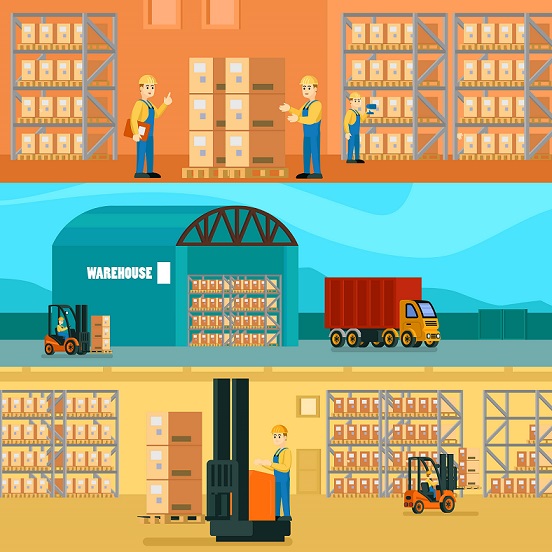
A consolidation warehouse is a logistics facility designed to receive, store, group and distribute goods. This type of warehouse is used to receive goods from many different carriers and combine them into larger, more efficient shipments, thus optimizing loading capacity and reducing the number of trips required for delivery.
Practical example: imagine several small businesses that need to ship products to the same destination. Instead of sending each shipment separately, which increases costs and carbon emissions, they can send their products to a consolidated warehouse, where they are combined into one larger shipment.
How do consolidation warehouses work?
I magazzini di consolidamento operano attraverso un flusso di lavoro specifico che comprende diverse fasi:
Goods receipt
Goods arrive at the warehouse from different suppliers or points of origin. At this stage, an efficient receiving process is crucial, which will allow a quick identification and placement of the products.
Classification and grouping
The next step is to sort the goods according to specific criteria such as destination, product type, weight and size. This phase is important to ensure optimal product consolidation and maximum efficiency of combined deliveries.
Combined loads
Once the goods are sorted and grouped, they are combined into larger shipments, filling entire trucks or containers, maximizing available space and reducing the number of vehicles needed for transport.
Final distribution
Consolidated merchandise is shipped to its destination. This process optimizes shipping routes, reduces shipping costs and times, and improves the utilization of logistics resources.
Advantages of consolidation warehouses for the transportation industry
Consolidation warehouses are an essential tool in transportation, maximizing operational efficiency, reducing costs and minimizing environmental impact.
Reduction of operating costs
Consolidation allows carriers to maximize their vehicle loads, reduce the unit cost of products shipped, and increase profits per trip. This efficiency is especially important in times of high competition and low profits.
Lower environmental impact
The use of consolidation warehouses helps reduce the number of vehicles on the road, leading to a reduction in greenhouse gas emissions. This practice is important for companies that want to comply with environmental regulations and improve their sustainability.
Improved route efficiency
Route optimization is a key advantage of consolidated warehouses. By consolidating products and planning routes more strategically, companies can avoid unnecessary trips and reduce travel time. This makes deliveries faster and more efficient.
Technologies supporting consolidation warehouses
Technology plays an essential role in warehouse success, providing advanced tools to improve management, streamline processes and ensure the quality of logistics operations. Below we analyze the key technological innovations that make these warehouses efficient and productive.
Transportation Management Software (TMS)
Transportation management systems or TMS enable logistics companies to plan and coordinate consolidated shipments efficiently, improving real-time visibility and facilitating decision making.
IoT and sensor solutions
The use of IoT devices and sensors in consolidation warehouses helps monitor temperature, humidity and other critical commodity conditions, ensuring that product quality and safety are maintained throughout the process.
Artificial Intelligence (AI) and Machine Learning
These technologies make it possible to predict demand patterns and optimize shipment consolidation, improving the overall efficiency of the operation.
Challenges in the implementation of consolidation warehouses
Implementing a consolidation warehouse is not without its challenges. Some of the most common challenges include:
Infrastructure investments
Consolidation warehouses require significant investment in infrastructure, which may include building facilities, acquiring technology and hiring specialized personnel.
Complex coordination
Managing multiple suppliers and types of goods can be complex. This requires a robust management system and clearly defined processes to avoid errors and delays.
Technology integration
Implementing and maintaining advanced technological solutions, such as a TMS and control systems, can be costly and requires adequate training of personnel to ensure proper operation.

Use cases: how consolidation warehouses help shippers
Transportation companies that implement consolidation warehouses can transform their operations in a number of ways:
- Cost optimization: companies can offer more competitive rates and improve their profit margin by maximizing cargo capacity and reducing the number of trips required.
- Greater flexibility: consolidation warehouses make it possible to adapt quickly to changes in demand, improving responsiveness to market fluctuations.
- Expansion into new markets: carriers can reach more destinations efficiently by consolidating shipments for long-haul routes.
Use of delivery route optimizing software
A key element that further enhances the benefits of consolidation warehouses is the implementation of a Route optimizer software delivery routes. This tool allows transport companies to plan delivery routes more strategically, taking into account factors such as traffic, weather conditions and time constraints.
The use of optimization software and consolidated processes ensures efficient distribution of goods, reducing delivery times and fuel consumption. For example, when a load is consolidated in a warehouse, the software can calculate the best route to maximize delivery and minimize miles traveled, resulting in a more sustainable and cost-effective operation.
Key benefit: companies using route optimization software in conjunction with centralized warehousing can improve delivery accuracy, reduce logistics costs and increase customer satisfaction by reducing delivery time.
The future of consolidation warehousing in the supply chain
The role of consolidation warehouses evolving as companies adopt advanced technologies, such as autonomous vehicles and automated product handling systems. The growth of e-commerce will also drive the need for consolidation, especially for last-mile utilities.
Future trends:
- Process automation: implementation of robots and artificial intelligence systems for product classification and grouping.
- Improved sustainability: increased adoption of environmentally friendly practices, such as the use of electric vehicles for distribution.
- Collaborative platforms: integration of digital platforms that allow carriers to collaborate in shipment consolidation, further optimizing operations.
Conclusion
Consolidation warehouses have become an important strategic tool for transportation companies. They not only reduce costs and increase efficiency, but also contribute to more sustainable and flexible operations. Adopting a consolidated approach can make the difference between maintaining a relevant market position or falling behind.

Communications & Marketing Responsible at Hedyla
Multimedia Technical Engineer. Working 11 years in the Audiovisual and Communication Department of a multinational company. Responsible for the Marketing and Communication Department in several companies in the technology sector.
Designing digital strategies. Innovating and adding value to communication.