

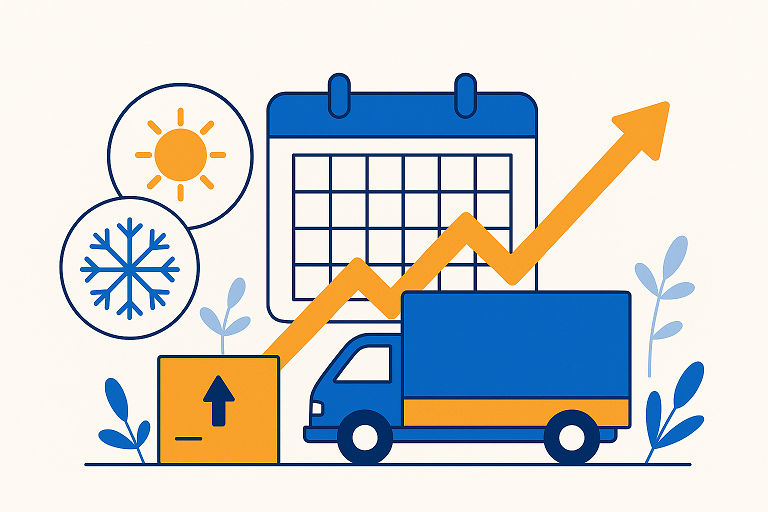
Logistics seasonality can be the difference between an efficient operation and a completely overwhelmed one. High-demand periods such as Black Friday, back-to-school, or the holiday season can put even the most well-organized supply chains to the test. But it’s not just about peaks—slow periods also require strategic adjustments. In this article, we explore how these cycles affect logistics planning and what strategies can help you stay ahead.
What Is logistics seasonality?
Seasonality isn’t just a retail phenomenon. It affects industries like food and beverage, fashion, automotive, and pharmaceutical logistics. Understanding how these patterns occur throughout the year is the first step toward proactive management. In this section, we define logistics seasonality, its main triggers, and why anticipating it is so critical.
Main effects of seasonality on logistics
Adapting to seasonal peaks isn’t just about moving more goods. It means handling tighter timeframes, higher volumes, limited resources, and rising customer expectations. Below are the main effects of seasonal demand on the supply chain and the most common challenges companies face.
Surge in demand and operational pressure
Seasonal campaigns often condense into a few weeks what would typically be spread over months. This creates bottlenecks in warehouses, delivery routes, and last-mile services.
Variable logistics costs
Relying on extra resources, like urgent transport, external warehousing or temporary staffing, has a direct impact on margins. Without proper forecasting, these costs can skyrocket.
Risk of stockouts
Failing to accurately forecast demand levels can lead to stockouts during critical periods, resulting in lost sales and reputational damage.
How to anticipate logistics seasonality
Strong logistics planning is data-driven, flexible, and tech-enabled. Companies that adapt best to seasonal changes aren’t necessarily the ones with the most resources—but those that plan ahead. Here are four key strategies to anticipate seasonality and turn it into a competitive advantage.
Analyze historical demand data
Data analysis is essential for spotting trends. Reviewing logistics performance from previous years allows you to forecast volumes, delivery patterns, and staffing needs more accurately.
Early resource planning
From hiring drivers to reserving warehouse space or vehicles, planning weeks or even months, ahead helps secure better rates and avoid last-minute costs during peak logistics season.
Use of technology and TMS Software
A reliable Transportation Management System (TMS) helps forecast demand peaks, optimize routes, balance loads, and make real-time decisions. TMS software comes in. is the best ally for navigating change with agility.
Communication with clients and suppliers
A synchronized supply chain requires transparency. Sharing estimated volumes with suppliers and aligning delivery expectations with clients in advance prevents friction and improves service levels.
The role of TMS software in managing logistics seasonality
Managing logistics seasonality isn’t just about forecasting and resource allocation—technology plays a crucial role. In particular, a TMS (Transportation Management System) has become an essential tool to stay ahead of seasonal logistics peaks.
A TMS software platform allows you to manage, automate, and optimize the entire transportation process from one central location, offering several key benefits during seasonal demand:
Scenario simulation and early planning
It lets you model different situations (volume surges, route changes, scheduling adjustments) and understand their operational impact before they occur—enabling proactive decision-making.
Real-Time route optimization
When resources are stretched and time is tight, optimize routes dynamic lowers costs, improves delivery times, and allows you to handle more volume without expanding your fleet.

Full visibility of operations
A quality TMS gives you real-time control over shipment status, which is essential during campaigns where even minor disruptions can escalate quickly.
Resource allocation based on demand
TMS systems allow for smarter assignment of drivers, vehicles, and shifts, preventing overloads or underutilization of resources during logistics seasonality.
Improved customer experience
By enabling shipment tracking, more accurate delivery times, and smoother communication, a TMS increases customer satisfaction—even during high-pressure periods.
In short, a TMS doesn’t just help you survive seasonal demand—it turns it into a competitive edge: more efficiency, more control, and better decisions, even during the year’s most intense moments.
Example: logistics planning for the summer sales
The summer sales season is a key moment for retail, especially in sectors like fashion and accessories. For logistics operators, it represents a short but intense campaign, where order volumes can double within a few days—often coinciding with the vacation period of many workers.
Imagine a logistics provider working with several retail brands across the Iberian Peninsula. In early June, they begin analyzing data from previous years and identify that the first weekend of the sales accounts for up to 40% of the month’s total shipments, with peaks concentrated in coastal and urban areas.
With that insight, they adjust their logistics planning:
- Reinforce warehouse shifts during the first two weeks of the campaign.
- Hire additional delivery services in tourist areas.
- Use a TMS to predict optimal delivery scheduling based on time slots and high-density zones.
- Coordinate with clients to stagger promotional campaigns and avoid traffic surges.
The result: they keep logistics KPIs stable—even with double the volume on certain days—improve delivery punctuality, and avoid bottlenecks in the operation.
Conclusion: seasonality isn’t a problem, if you plan for It
Logistics seasonality can’t be avoided, but it can absolutely be anticipated and managed effectively. The key lies in preparation. By analyzing data, optimizing processes, planning resources, and leveraging technology like a TMS software, companies can not only weather the peaks—but enhance overall supply chain performance.
Instead of viewing seasonality as a threat, the most competitive businesses treat it as an opportunity to grow, build stronger client relationships, and sharpen their logistics strategy. In a constantly evolving sector, those who prepare best, deliver best.

Communications & Marketing Responsible at Hedyla
Multimedia Technical Engineer. Working 11 years in the Audiovisual and Communication Department of a multinational company. Responsible for the Marketing and Communication Department in several companies in the technology sector.
Designing digital strategies. Innovating and adding value to communication.