
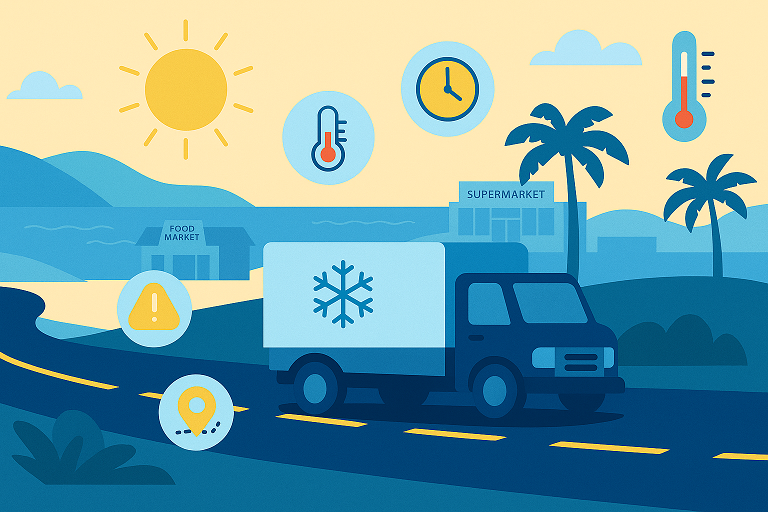
Summer is one of the most demanding seasons for food logistics. High temperatures, spikes in demand in tourist areas, and the need to maintain flawless traceability complicate the daily operations of carriers and distributors.
Below, we analyze the five main challenges the sector faces during the summer season and how to successfully overcome them.
1. Cold chain management: the top summer challenge
During the summer months, breaking the cold chain becomes one of the greatest risks for logistics companies that handle perishable goods. A failure in the refrigeration system or an extended stop without proper control can lead to the loss of high-value and sensitive merchandise.
To avoid this, it’s essential to:
- Use well-maintained fleets with reliable refrigeration systems.
- Install sensors to monitor temperature in real time.
- Optimize delivery routes to reduce transit time and avoid unnecessary stops.
2. Reduced staff and holiday traffic
The summer season brings changes in workforce availability and traffic conditions, especially in tourist zones. Deliveries are delayed, incidents increase, and operational efficiency is compromised.
To manage this scenario, companies should:
- Reconfigure routes and shifts based on staff availability.
- Anticipate traffic congestion in critical areas.
- Improve communication between warehouses, drivers, and retail locations.
Last-mile logistics in summer requires extremely agile and adaptable planning.
3. Demand spikes and shifts in consumer behavior
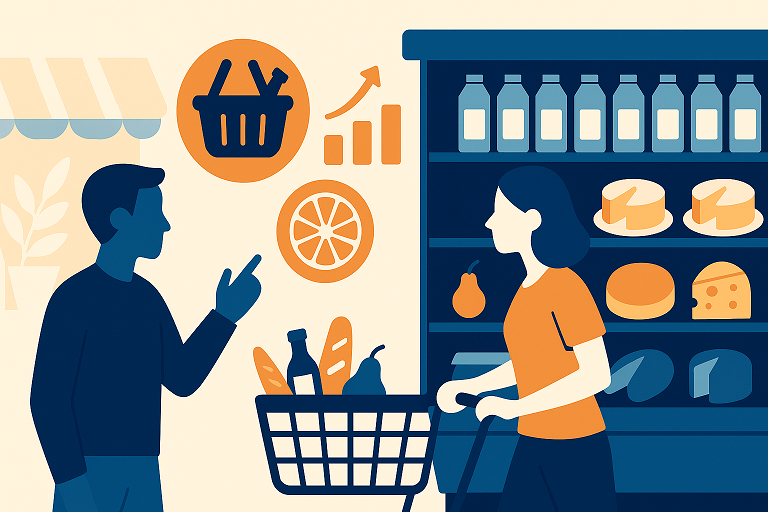
Consumer buying patterns shift in summer. There’s greater turnover in fresh produce, chilled beverages, and ready-to-eat meals, especially in coastal or tourist regions. This leads to demand spikes that don’t always follow typical yearly patterns.
What does this mean for distributors?
- Strengthen coordination with suppliers and retail points.
- Adjust delivery frequency and truckload size to match real demand.
- Avoid stockouts without unnecessarily overextending the fleet.
Anticipating these changes using historical data and forecasting tools helps maintain a healthy balance between service quality and cost control.
4. Food traceability: full visibility
Food traceability is crucial year-round, but in summer the margin for error shrinks significantly. Rising incidents, unpredictable demand, and higher sensitivity to temperature demand a detailed and fully digital traceability system.
An effective traceability solution should:
- Record temperature conditions throughout the journey.
- Electronically validate each delivery.
- Detect deviations in real time to enable rapid response.
Customer trust largely depends on the ability to prove that goods were transported under safe and controlled conditions.

5. Leveraging technology and TMS for operational control
Faced with the specific challenges of transporting food products, using the right technology becomes a key differentiator. A TMS software allows logistics operators to:
- Plan routes considering constraints like time, temperature, and delivery priority.
- Reassign resources when unexpected issues arise (vehicles, drivers, time slots).
- Gain end-to-end shipment traceability, from warehouse to final delivery point.
- Monitor operations in real time and make data-driven decisions.
Additionally, integrating the warehouse management systems (WSM) or supermarket software enables companies to align logistics with actual demand and improve overall operational efficiency.
Conclusion: navigating the summer season in food transport
Summer puts the resilience of the entire food logistics chain to the test. Operators who anticipate challenges, digitize their processes, and maintain a high level of control will be the ones who overcome this critical period most effectively.
Carriers and distributors should view summer not just as a challenge, but as an opportunity to optimize processes and demonstrate their operational capabilities.

Communications & Marketing Responsible at Hedyla
Multimedia Technical Engineer. Working 11 years in the Audiovisual and Communication Department of a multinational company. Responsible for the Marketing and Communication Department in several companies in the technology sector.
Designing digital strategies. Innovating and adding value to communication.