
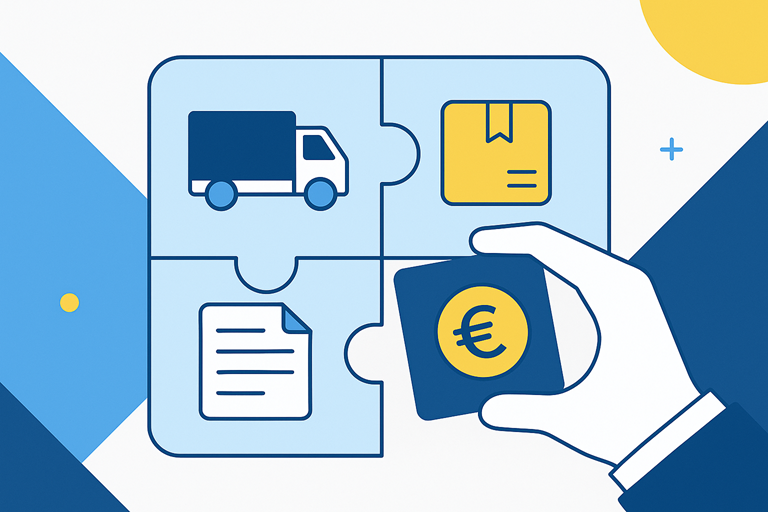
A modular solution in transportation helps companies avoid unnecessary costs because you only pay for what you actually use, you can scale the system when needed, and you prevent training or maintenance complications. Many logistics and transportation companies face the same problem when digitizing: they end up purchasing “all-in-one” software packages filled with functions they never use. This not only means extra expenses, but also added complexity in management and employee training.
Modularity solves this challenge by allowing each company to configure its own TMS (Transportation Management System) according to real needs. As a result, technology investment becomes a flexible and efficient resource, capable of growing with the business and guaranteeing a faster and measurable return on investment.
What Is a modular solution in transportation?
A modular solution in transportation is software divided into blocks or independent modules that companies can activate or deactivate based on their needs.
This makes it possible to choose only the functionalities that will be used and pay exclusively for them.
Examples:
- A national transportation company may start with route planning and driver management modules.
- An international distributor may activate pricing and pre-billing or document management.
- A retail company that combines in-house and subcontracted logistics may add cost control and real-time tracking.
This way, every company designs its own TMS software custom, avoiding unnecessary costs and aligning investment with its objectives.
The problem with closed systems in transportation
Many companies still rely on “all-in-one” software that bundles multiple features into a fixed package.
The drawback is clear:
- Paying for modules that are never used.
- Slower, more confusing employee training.
- A rigid system that is harder to adapt to market changes.
A modular TMS, on the other hand, grows at the same pace as your business, preventing the overpayment of functions you may never use.

3 Reasons why a modular TMS helps avoid unnecessary transportation costs
1. Pay only for what you use
A modular system eliminates expenses on features that don’t add value to your business. The technology budget is tailored precisely to your operations.
2. Scale at your own pace
Transportation is constantly changing: new clients, more orders, international expansion… With a modular solution in transportation, you can add modules as needed, avoiding premature investments.
3. Easier training and support
Fewer unnecessary modules mean less time and money spent on training and support. Employees focus only on what they need, reducing errors and boosting productivity.
Real impact on transportation costs
Implementing a modular TMS doesn’t just save on licenses; it also reduces daily operating costs. Some examples:
- Fewer planning hours: a route optimization module can cut up to 30% of the time spent organizing trips.
- Fewer human errors: simpler systems help avoid mistakes in addresses, invoicing, or load assignments, which often create hidden costs.
- Better financial control: pricing and pre-billing modules help detect deviations and invoice clients more accurately.
- Less paperwork and manual processes: electronic document management eliminates costs tied to printing, storage, and lost records.
All of this translates into tangible savings that directly improve business performance.
How modularity improves ROI in transportation
Adopting a modular solution in transportation doesn’t just reduce licensing costs. It also accelerates return on investment (ROI) because each module delivers measurable benefits:
- Employee productivity: less time on manual tasks, more focus on strategic operations.
- Reduced hidden costs: by avoiding errors in invoicing, planning, or communication.
- Infrastructure savings: only what is needed is used, keeping technology investment proportional to business size.
- Flexibility to grow: companies can add modules as demand increases or markets change, avoiding full reinvestment in new software.
A common case is when transportation companies start with basic planning modules and, as they grow, add real-time tracking or cost control. Each step in digitization is justified, helping achieve ROI faster.

Examples of modular TMS use
To better understand how it works, let’s look at three scenarios:
- Small national transport company: activates route planning and driver management modules, reducing planning time and monitoring staff availability.
- International logistics operator: activates pricing, document management, and real-time tracking modules to improve traceability and client relationships.
- Retail company with its own fleet: activates cost control and dynamic dashboard modules, enabling quick analysis of route profitability.
These examples show how every business can build its own system, avoiding the trap of “all-inclusive” software that doesn’t always deliver value.
FAQs about modular solutions in transportation
What does it mean for a TMS to be modular?
It means the software is made up of independent modules that can be activated or deactivated according to the company’s needs.
How does a modular solution help reduce transportation costs?
It allows companies to pay only for the features they use, scale without forced investments, and simplify training and maintenance.
What are the benefits compared to closed software?
A modular TMS avoids overpaying for unnecessary functions, adapts better to market changes, and ensures a faster return on investment.
What types of companies benefit the most from modularity?
From small carriers to large logistics operators—each can adapt the tool to their needs without taking on unnecessary costs.
Conclusion: modularity = savings in transportation
A modular solution in transportation isn’t just a tech trend, it’s a business strategy to cut unnecessary costs, adapt to market changes, and maximize efficiency.
Modularity allows companies to grow step by step, without paying for what they don’t use, and with the certainty that each digital investment will directly impact logistics operations.

Communications & Marketing Responsible at Hedyla
Multimedia Technical Engineer. Working 11 years in the Audiovisual and Communication Department of a multinational company. Responsible for the Marketing and Communication Department in several companies in the technology sector.
Designing digital strategies. Innovating and adding value to communication.