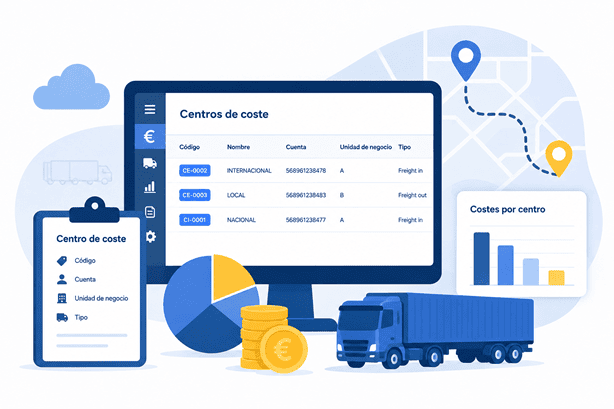
6 Common Mistakes When Calculating Transport Costs

Costes_de_transporte - Blog Hedyla - portada

(y cómo evitarlos con tecnología) Calcular correctamente los costes de transporte es una de las tareas más complejas, y a la vez más determinantes, dentro de la operativa logística. No porque falte información, sino porque gran parte de esa información está dispersa, no se mide con precisión o se analiza demasiado tarde. En muchas empresas, … Read more

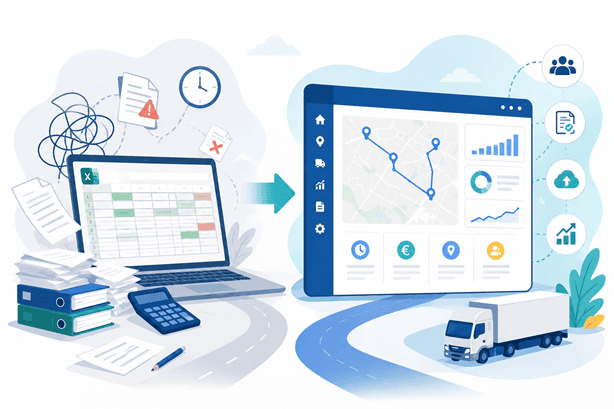
10 signs that manual planning in transport is no longer sustainable in 2026

blog hedyla - planificación manual en el transporte - portada

Durante años, la planificación manual en el transporte ha sido la base de muchas empresas de transporte: hojas de Excel, llamadas, experiencia del planificador y mucho conocimiento en la cabeza del equipo. El problema ya no es cómo empezaste, sino hasta dónde puede llegar ese modelo en 2026, con más complejidad operativa, márgenes más ajustados y presión … Read more

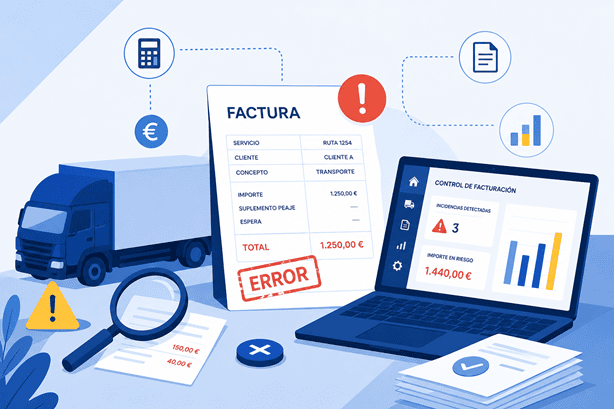
Why is a modular transport solution the key to avoiding unnecessary costs?

solucion modular en transporte portada -blog hedyla

Una solución modular en transporte te evita costes innecesarios porque solo pagas por lo que realmente usas, puedes escalar tu sistema cuando lo necesites y evitas complicaciones de formación o mantenimiento. Muchas empresas de logística y transporte se encuentran con el mismo problema al digitalizarse: terminan contratando softwares “todo en uno” con funciones que nunca … Read more

How do 3PL and 4PL transform logistics for shippers?

freepik.com-3pl-y-4pl-portada

Las siglas 3PL y 4PL están cobrando cada vez más importancia en el campo de la logística, especialmente para los transportistas que quieren mejorar la eficiencia operativa y satisfacer las crecientes demandas del mercado. Pero ¿qué significa cada uno de estos modelos? ¿Cómo pueden beneficiar a los transportistas? En este artículo, analizaremos sus características, beneficios … Read more

What is the DAP Incoterm and what is its importance?

freepik.es-incoterm-dap-portada

El Incoterm DAP (Delivered At Place, por sus siglas en inglés) es uno de los estándares internacionales más utilizados en el comercio global que regula las responsabilidades en la entrega de mercancías. Este término se ha vuelto importante para las empresas que desean evitar malentendidos en las transacciones comerciales internacionales. Su importancia radica en la … Read more

Transport routing in logistics: How to do it?

hoja de ruta - portada

En diversas ocasiones ya se ha comentado que una gestión logística eficaz es fundamental para optimizar las operaciones de transporte y garantizar resultados exitosos. Una herramienta clave para lograr este objetivo es la hoja de ruta de transporte, un documento que permite optimizar recursos, acortar plazos y garantizar el cumplimiento de los objetivos logísticos. En este artículo, aprenderás cómo crear una hoja de ruta de … Read more

What is intermodal freight transport? Types and advantages

freepik.es-transporte-intermodal-de-mercancias-portada

El transporte intermodal de mercancías desempeña un papel importante en la logística al garantizar el movimiento eficiente de mercancías utilizando una variedad de modos de transporte. En el siguiente artículo veremos su definición, diferencias con el transporte multimodal, características, tipos, ventajas, desventajas y ejemplos para comprender mejor su funcionamiento y beneficios. ¿Qué es el transporte … Read more

4 challenges your company must take into account when installing a TMS

Edificio isométrico de almacén con camión de reparto. retos al instalar un TMS

As new logistics software solutions are being created to improve part of the supply chain processes, there are also challenges or mistakes that are often made in the use and installation of a TMS system. While it is true that more and more companies are taking the step to digitize and optimize transportation management, it is possible that operations are not performing as well as expected.

Se queste irregolarità non vengono affrontate, si perde la fiducia nel sistema di soluzioni logistiche, con conseguente insoddisfazione dei clienti e dell'azienda. Quindi, quali sono gli errori o le sfide più comuni quando si implementa e si applica efficacemente un TMS? Va notato che si stima che tra il 20% and 30% of the companies actively use a TMS.

If you want to know the most common challenges when installing a TMS and using it effectively, take a look!

Data collection

One of the challenges in installing a TMS that are also important and notable in the supply chain is that logistics operators and carriers are not yet able to reconcile their data. Such a challenge poses a problem in case there are service failures that have not yet been detected.

It is evident that every company in every part of the supply chain collects separate KPIs or SLAs from those that are stored on their own servers and systems. By the time dashboards are made for analysts or errors are reported via e-mails or spreadsheets, the information received is usually not accurate and the process is very tedious.

Therefore, it is important that the TMS or other similar software such as an ERP be able to collect and share data from both operators and carriers, avoiding irrelevant or erroneous information. However, it is recommended that such sharing can be done as smoothly and efficiently as possible, avoiding delays that cause misinformation about the status of transport.

Revisione della strategia

Before considering installing a TMS, as with any project, it is essential to establish a solid and realistic strategy in order to assign coherent objectives related to this action. In addition, all documents on departments, carriers, among others, must be updated and in order to start implementing them in the TMS.

However, it is possible that the TMS may begin to show unsatisfactory results or detect more frequent and more serious errors. In the event that the TMS does not have many problems collecting accurate information, one of the most likely cases is that the current strategy has become obsolete due to internal company or external changes affecting a large part of the industry.

In such a case, the established strategies and objectives should be revisited to see if they fit with the current landscape. If inconsistencies are detected, the strategies and objectives need to be redirected. An example would be if there have been very large changes in fleet volume, either a reduction or expansion of vehicles and carriers.

gestión de la flota. Retos al instalar un TMS

Read more