
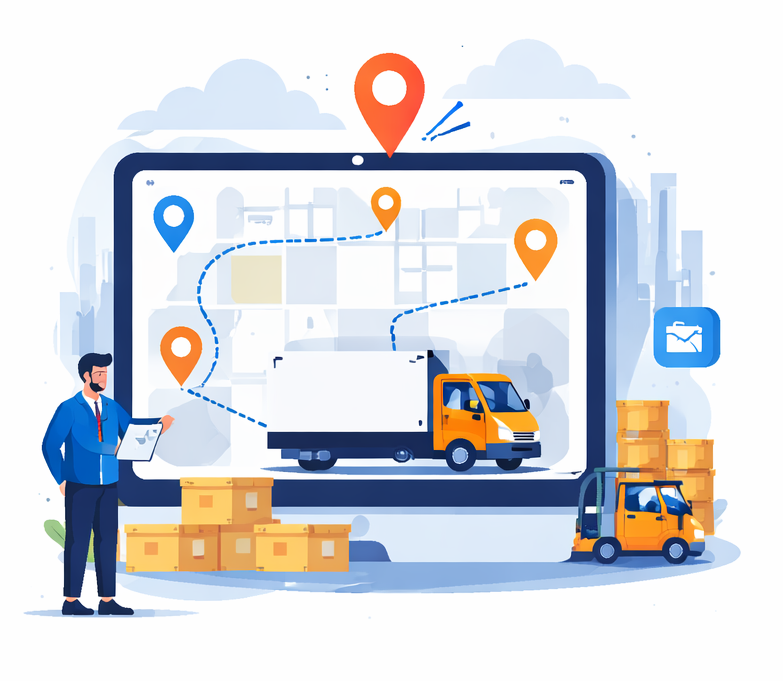
Real-time GPS in logistics has become a core capability for transportation companies that need to understand what is happening on their routes while they are being executed—not when it is already too late to respond. More than a matter of technology, it is about turning every mile driven into actionable information that supports operational decisions as they happen.
When operations stop being a black box and start producing real-time data, transportation becomes more predictable and far less dependent on phone calls, assumptions, or guesswork. This is the foundation of end-to-end traceability and the reason why real-time GPS fits naturally into a TMS focused on the day-to-day management of routes.
Below are five reasons why this capability delivers real, tangible value to logistics operations.
1. Continuous visibility during route execution
One of the main advantages of real-time GPS in logistics is the ability to know where vehicles are while they are on the road, with constant updates and without relying on calls or messages from drivers.
This visibility allows dispatch and traffic teams to work with an accurate view of the operation:
- Knowing where each vehicle is at any given moment
- Identifying which route it is executing
- Understanding how it is progressing compared to the original plan
Operations move away from estimates and are instead managed using real data. This reduces uncertainty, avoids decisions based on incomplete information, and improves control over daily execution.
2. Logistics traceability beyond a dot on the map
Traceability in transportation is not just about locating a truck. It requires a complete view of the journey and everything that happens while the route is being executed.
Real-time GPS makes it possible to:
- Track the actual progress of each route
- Detect deviations early
- Analyze routes once they are completed
This information is especially valuable for identifying patterns, comparing planned routes with executed ones, and detecting recurring friction points. Traceability stops being a passive record and becomes a tool for continuous improvement.
3. Better decision-making for dispatch teams
Real-time vehicle tracking has a direct impact on the daily work of dispatch and planning teams. Having up-to-date information allows decisions to be made with context and room to act.
Some of the clearest benefits include:
- Anticipating issues before they escalate
- Reorganizing routes when necessary
- Prioritizing critical deliveries
- Reducing reliance on constant calls to drivers
Decisions are made while the operation is still in progress—not after the issue has already affected the entire route. This improves team efficiency and reduces operational strain.
4. Fewer incidents and clearer communication
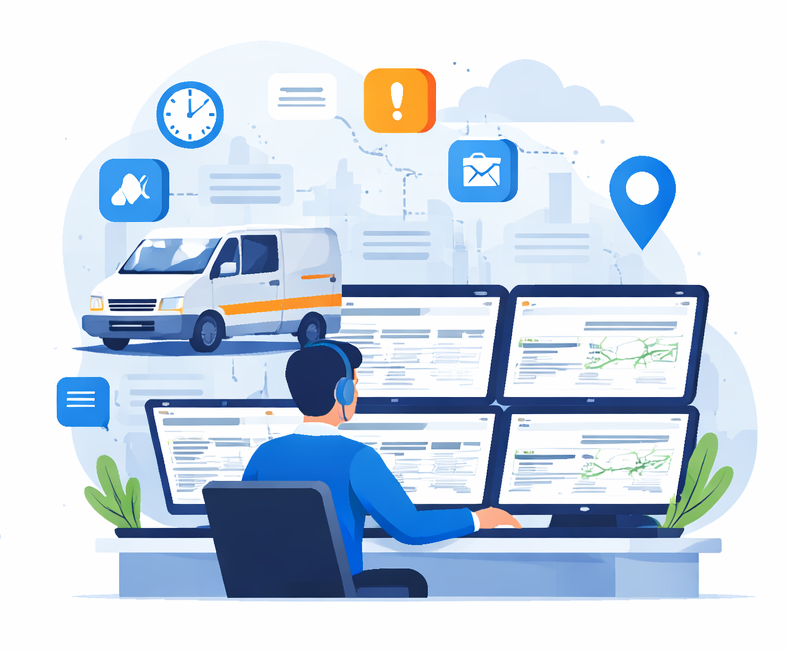
When there is no visibility into route execution, any deviation creates operational friction: phone calls, emails, unclear explanations, and wasted time—both internally and externally.
Real-time GPS in logistics helps teams:
- Communicate more accurately
- Adjust expectations when delays occur
- Reduce complaints
- Improve coordination with customers and partners
Communication based on real data increases credibility and minimizes misunderstandings. Teams stop reacting to problems and start managing them with verified information.
5. A strong impact on last-mile operations
In last-mile operations—where there are multiple stops, tight delivery windows, and complex urban environments—end-to-end traceability becomes especially important.
Real-time fleet tracking allows teams to:
- Monitor multiple vehicles simultaneously
- Detect issues quickly
- Adapt operations to traffic changes or access restrictions
In scenarios with limited room for adjustment, having execution-level visibility often makes the difference between an on-time delivery and a disruption that affects the rest of the route.
Practical example: how real-time GPS prevents reactive management
Imagine an urban distribution company running several active routes during the morning.
Without real-time traceability, the dispatch team only becomes aware of a delay when a driver reports it or when a customer complains. At that point, response options are limited and usually involve last-minute adjustments.
With real-time GPS, the system shows that one vehicle is deviating from the planned route and moving more slowly than expected. This insight makes it possible to redistribute deliveries, adjust priorities, or notify stakeholders in advance—before the delay impacts the rest of the operation.
The value is not in knowing what happened, but in acting while there is still room to maneuver.
Conclusion: traceability as the foundation of operational control
Implementing real-time GPS in logistics is not about “putting a dot on a map.” It is a step toward operations that are more controllable and less reactive. Companies that work with full traceability typically experience fewer incidents, clearer communication with customers, and a more realistic understanding of how their routes behave day to day.
Ultimately, real-time information stops being an optional add-on and becomes part of the operational core. Without visibility during execution, it is extremely difficult to manage transportation in a consistent way that reflects what is actually happening on the road.

Communications & Marketing Responsible at Hedyla
Multimedia Technical Engineer. Working 11 years in the Audiovisual and Communication Department of a multinational company. Responsible for the Marketing and Communication Department in several companies in the technology sector.
Designing digital strategies. Innovating and adding value to communication.