
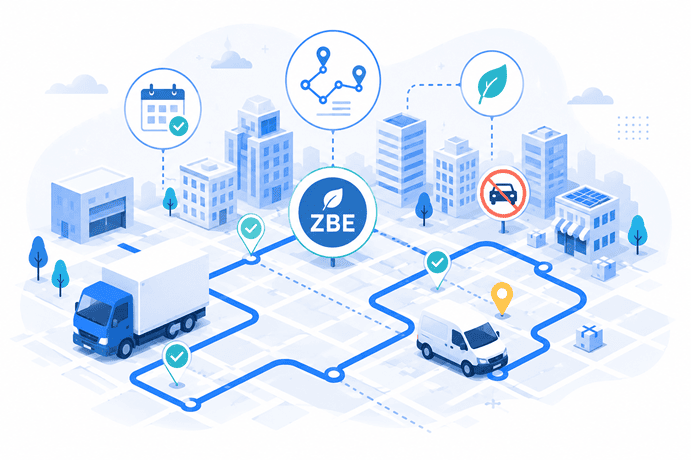
Urban Freight Distribution (UFD) is becoming increasingly complex. Alongside the growth of e-commerce, rising customer expectations for faster deliveries and increasing traffic congestion in cities, transport companies now face an additional regulatory challenge: access restrictions imposed by Low Emission Zones (LEZs).
Today, planning an urban delivery route is no longer simply about deciding which vehicle should complete each delivery or choosing the shortest route. Traffic managers must answer critical questions in real time:
- Which streets have restricted access today?
- Which vehicles in the fleet meet the required environmental standards?
- What are the permitted loading and unloading time windows in each municipality?
In this context, technology has become an essential ally. A Transportation Management System (TMS) enables companies to manage urban freight distribution more efficiently without increasing the workload of the transport planning team.
Why Is Urban Freight Distribution Becoming More Complex?
Cities have changed, and so has last-mile logistics. Customers expect faster deliveries, retailers operate with lower inventory levels, and transport companies are required to complete more deliveries in less time while maintaining high service standards.
In addition to everyday urban congestion, five key factors are making urban freight distribution increasingly challenging:
- Traffic congestion: Higher levels of congestion, particularly in city centres.
- Environmental access restrictions: Vehicle access limitations based on Euro emission standards and environmental labels.
- Loading and unloading constraints: Fewer dedicated loading areas and tighter delivery windows.
- Strict delivery time slots: Customer requirements that often conflict with municipal regulations.
- Sustainability targets: Corporate commitments to reduce carbon emissions and environmental impact.
Where route planning once focused mainly on finding the shortest journey, today's operations require planners to consider all these variables before confirming a delivery schedule.
How Low Emission Zones (LEZs) Affect Urban Freight Distribution
Low Emission Zones are part of many cities' environmental strategies to improve air quality. However, because there is no single regulatory framework, each municipality can define its own access rules.
As a result, transport companies operating across different metropolitan areas often face a fragmented regulatory landscape:
- Different environmental requirements: A vehicle authorised in one city may be restricted in a neighbouring municipality.
- Municipality-specific delivery windows: Loading and unloading schedules vary depending on the city and vehicle type.
- Special permits and exemptions: Certain services or vehicles may require specific authorisations.
- Temporary pollution protocols: Emergency measures can suddenly restrict access for certain vehicle categories.
For transport planners, this fundamentally changes urban logistics. Route planning is no longer based solely on the distance between two points but also on dynamic regulatory requirements that directly affect daily operations.
The Main Challenges of Planning Urban Logistics Without Technology
The complexity of urban freight distribution often becomes evident when an issue arises during deliveries. Consider these common scenarios:
Scenario 1: A supermarket located in the city centre only accepts deliveries between 7:00 a.m. and 9:00 a.m.
Scenario 2: A restaurant in a historic district needs supplies before opening, but access is restricted to vehicles weighing more than 3.5 tonnes.
Scenario 3: A driver must deliver to three different municipalities on the same morning, each operating under different LEZ regulations.
Planning these routes manually—or using traditional tools such as spreadsheets—can lead to significant inefficiencies, including last-minute vehicle changes, fines for unauthorised access, delayed deliveries and increased operating costs. The problem doesn't start when the driver reaches the city. It begins much earlier, when routes are planned without centralised, up-to-date information.
How a Transportation Management System Optimises Urban Freight Distribution in LEZs
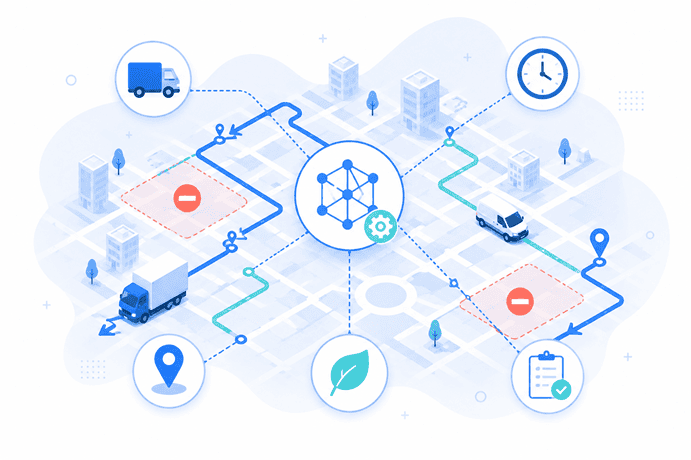
A advanced Transportation Management System (TMS) integrates operational and regulatory constraints directly into the route optimisation process, ensuring routes are feasible before vehicles leave the depot.
Automated Multi-Constraint Planning
A TMS doesn't simply combine order volumes with driver availability. It simultaneously considers environmental vehicle classifications, customer delivery windows and LEZ restrictions to generate an efficient and compliant transport plan.
Intelligent Fleet Assignment
The system automatically determines which vehicle is best suited for each delivery. For example, electric vans or low-emission vehicles can be assigned to protected city centres, while heavy goods vehicles are allocated to peripheral routes or consolidation hubs.
Dynamic Route Optimisation
In urban logistics, the shortest route is not always the best one. A specialised TMS calculates routes that avoid restricted streets, make the most of lower traffic periods and ensure agreed delivery times are met.
Responding Quickly to Unexpected Events
If a city activates emergency pollution measures or an unexpected road closure occurs, the platform centralises all relevant information and allows planners to re-optimise routes in real time, minimising operational disruption and additional costs.
The Importance of a Strong Digital Foundation
Route optimisation is only effective when supported by reliable data. Poorly geocoded addresses or outdated fleet information significantly reduce the value of any technology.
In addition, effective planning depends on seamless data exchange between the different systems involved in transport operations, such as ERP platforms, Warehouse Management Systems (WMS) and tracking solutions. These integrations ensure planners always work with accurate, up-to-date information and make better operational decisions. In our article "What Is an API in Logistics and Why Is It Essential for Connecting Your TMS?" we explain how APIs automate data exchange and improve the efficiency of the entire transport operation.
Benefits of Digitising Urban Freight Distribution
Automating urban freight distribution through a specialised technology solution has a direct impact on both operational performance and sustainability goals.
- Reduced mileage: More efficient routes and fewer repeat deliveries.
- Fewer penalties: Avoiding fines for unauthorised access to Low Emission Zones.
- Better fleet utilisation: More deliveries per route through smarter planning.
- Improved OTIF performance: Higher on-time delivery rates and greater customer satisfaction.
- Enhanced sustainability: Lower fuel consumption and reduced greenhouse gas emissions.
Conclusion
Urban freight distribution will continue to evolve as cities introduce stricter environmental regulations. Low Emission Zones are no longer the exception—they are becoming the standard.
In this new operating environment, having a Transportation Management System capable of incorporating LEZ restrictions into daily route planning is no longer an optional competitive advantage. It has become an essential capability for maintaining operational efficiency and ensuring transport operations remain compliant with an increasingly complex regulatory landscape.

Communications & Marketing Responsible at Hedyla
Multimedia Technical Engineer. Working 11 years in the Audiovisual and Communication Department of a multinational company. Responsible for the Marketing and Communication Department in several companies in the technology sector.
Designing digital strategies. Innovating and adding value to communication.
Me pareció muy interesante el tema, especialmente porque muestra que actualmente la planificación de rutas no depende solamente de buscar el recorrido más corto, sino que también se deben tener en cuenta restricciones, horarios y condiciones de cada zona. Como estudiante de Ingeniería en Logística, considero que el uso de herramientas como los TMS puede ayudar a tomar mejores decisiones y hacer más eficiente la distribución.
¡Muchas gracias por tu comentario! Has dado con una de las claves de la planificación actual: encontrar una buena ruta implica tener en cuenta muchas más variables que la distancia. Horarios, capacidades, restricciones o disponibilidad de recursos pueden cambiar por completo una planificación.
Nos alegra especialmente conocer la visión de quienes os estáis formando en logística. La tecnología seguirá ganando peso en el sector, pero siempre como una herramienta para ayudar a tomar mejores decisiones. ¡Mucho éxito con tus estudios!