
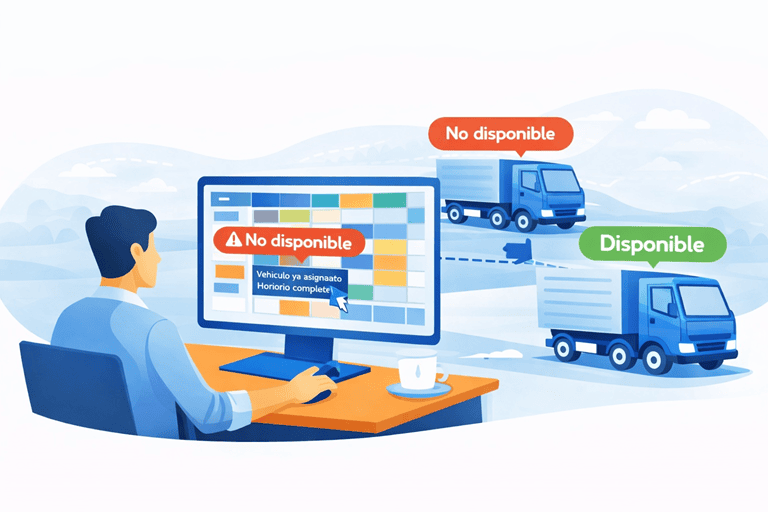
In many transport planning departments, vehicle availability in logistics directly determines how the daily planning is organized. The first question is usually always the same: which vehicles do we actually have available today?
At first glance, it seems like a simple question. The company has a defined fleet, the day’s orders are clear, and the traffic team simply needs to assign each vehicle to its corresponding route. However, in practice the situation is often much more complex.
In many logistics operations, information about the fleet is not always centralized. A vehicle may appear to be available when in reality it has already been assigned to another route, is finishing a previous service, or is part of another plan that was generated earlier. When this happens, conflicts usually appear at the worst possible moment: just as the operation is about to begin.
In addition, vehicles are not the only factor that affects planning. Drivers, their schedules, and the routes they already have assigned also directly influence the final outcome. That is why it is increasingly common to manage both aspects together, as happens when companies work with driver availability in logistics as part of the same planning process.
When fleet and resource information is integrated into the planning system, the work of the transport planning department changes significantly. The planner can see from the very beginning which vehicles are actually available and avoid many of the problems that arise when this information is reviewed too late.
1. Avoid assigning the same vehicle to multiple routes
One of the most common mistakes in transport planning is assigning the same vehicle to two different routes without realizing it.
This happens more often than it may seem. In many companies, several members of the team work on the planning at the same time, or different plans are generated for the same day. Last-minute changes that require route adjustments or vehicle reassignment are also quite common.
When there is no clear visibility of fleet availability, these conflicts are usually detected too late. The plan is already prepared and, just before the operation begins, the problem appears.
The most common situations include:
- a vehicle that was already assigned to another route on the same day
- a plan that overlaps with another previously generated plan
- last-minute changes that require vehicles to be reassigned
When the system displays vehicle availability during the planning process, the transport planner can identify these conflicts before confirming the plan and reorganize routes with more time.
2. Having real visibility over vehicle availability in logistics
In operations with many active routes, it is not always easy to know which vehicles are truly available.
Between routes that have already been assigned, vehicles finishing previous services, and constant planning adjustments, the fleet overview can easily become fragmented. Planners often need to check multiple sources of information to understand the real situation.
When vehicle availability in logistics is integrated into the planning system, this information becomes much clearer. The planner can quickly identify:
- which vehicles are already occupied
- which ones are available for new routes
- which vehicles have operational restrictions for the day
- which resources are already committed to another plan
This level of visibility is especially useful in operations involving multiple routes, logistics centers, or working shifts, a scenario that is increasingly common in modern transport planning.
3. Reduce last-minute route changes
One of the most critical moments for a transport planning team occurs just before daily operations begin.
Routes are already defined, orders are prepared, and everything should be ready to go. However, this is precisely when problems related to vehicle availability sometimes appear.
A vehicle that was already assigned, a service overlapping with another, or a plan conflicting with a different schedule may require part of the plan to be reorganized. This means moving orders between routes, reassigning vehicles, or even rebuilding part of the plan.
When the system takes the real availability of the fleet into account from the beginning, many of these conflicts are detected before the plan is generated. The result is a more stable planning process with fewer last-minute adjustments.
4. Making planning easier in complex operations
Logistics operations today are increasingly dynamic. Many companies operate from multiple loading centers, run routes at different times of the day, or use vehicles that perform several services within the same shift.
In these scenarios, planning routes is not just about assigning orders to vehicles. It also requires coordinating all available resources correctly.
In practice, it is common to encounter situations such as:
- vehicles performing one route in the morning and another in the afternoon
- fleets operating from different logistics centers
- services chained throughout the day
- routes changing due to incidents or delays
When the system shows the real availability of vehicles, the planner can better understand which resources can take on new routes and which ones already have part of their working day committed.
In some cases, it is even possible to visualize how much working time a driver already has assigned that day and how much capacity remains available for another service.
5. Making decisions with real operational information
Transport planning involves making decisions constantly: which vehicle to use, which route to reorganize, or how to adapt the plan when unexpected changes occur.
When resource information is scattered, many of these decisions are made with incomplete data. The planner may only have a partial view of the fleet’s real situation.
Having a clear view of vehicle availability provides something simple but extremely valuable: operational context at the moment of planning.
This allows planners to make decisions with greater confidence, for example:
- choosing which vehicle can take on a new route
- reorganizing services when an incident occurs
- avoiding overlaps between different plans
- adjusting fleet usage more efficiently during the day
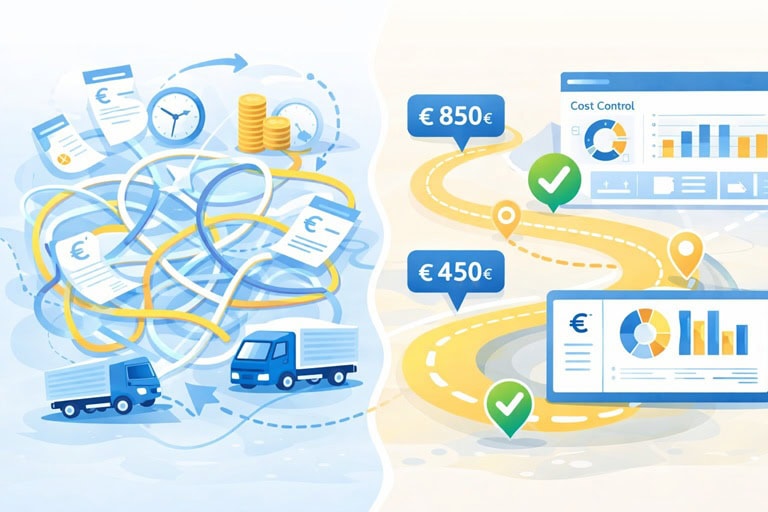
In addition, planning that better reflects the real availability of resources helps improve transport cost control, avoiding unnecessary reorganizations, delays, or additional kilometers.
Planning routes also means managing resources correctly
When people talk about transport planning, they often think about optimizing routes or reducing the number of kilometers traveled.
However, in the day-to-day work of a transport planning department, a large part of the job consists of coordinating the available resources correctly. Knowing which orders must be delivered is only part of the process. The other part is understanding which vehicles can actually perform those routes at any given moment.
When this information is part of a ransport management system (TMS), the planning process changes completely. The team can work with a clear view of fleet availability and avoid many of the problems that appear when this information is checked too late.
Conclusion
In daily transport operations, many planning problems are not related to the routes themselves, but to the real availability of resources.
A vehicle that was already assigned, a route that overlaps with another, or a working day that is already nearly full can force planners to reorganize the entire plan at the last moment. These situations create pressure in the planning department and increase the risk of errors.
For this reason, having a clear view of fleet availability within the planning system becomes a key element for working with greater confidence.
When planners can see from the beginning which resources are truly available, planning becomes more stable, incidents decrease, and daily operations run much more smoothly.

Communications & Marketing Responsible at Hedyla
Multimedia Technical Engineer. Working 11 years in the Audiovisual and Communication Department of a multinational company. Responsible for the Marketing and Communication Department in several companies in the technology sector.
Designing digital strategies. Innovating and adding value to communication.