




6 Ways to Make the Most of Dynamic Dashboards in a TMS and Improve Transportation Management

Hedyla Blog - Dynamic Dashboards in a TMS - Homepage

How many orders do we have pending? How many routes have we completed this month? What is the cost per route? Are we achieving the expected margins? These are common questions in any transportation department. The problem arises when finding the answers involves consulting different files, reviewing reports, or requesting information from various departments. Dynamic dashboards in a TMS allow you to gather… Read more

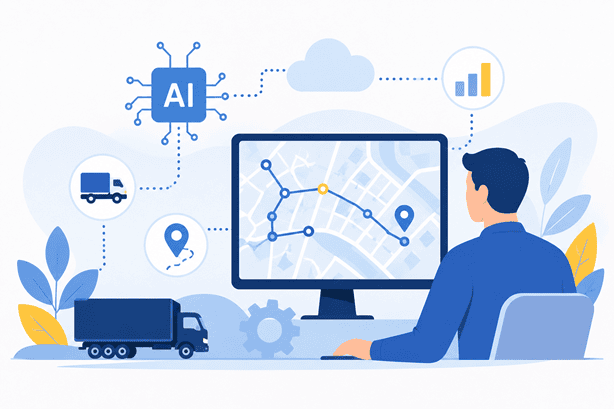
Artificial Intelligence in Logistics: Why AI Will Not Replace Planners

Hedyla Blog - Artificial intelligence in logistics

Artificial intelligence in logistics is making headlines, featured in presentations, and present in virtually every conversation related to transportation. No matter the event we attend or the meeting we participate in, sooner or later someone asks the same question: What will happen to planners? Will they still be necessary when technology… Read more

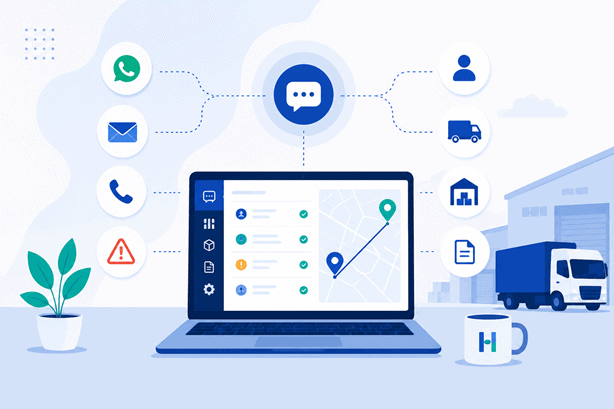
How to Centralize Communication in the Transportation Industry to Reduce Incidents and Improve Visibility

Hedyla Blog - Communication in Transport - Homepage

An issue is reported via WhatsApp. The customer inquires by email. The carrier calls to report a delay. And all the while, the traffic department tries to piece together what really happened. This situation is more common than it seems. As the volume of operations increases, so does the number of people involved… Read more

What Is an API in Logistics and Why Is It Key to Connecting Your TMS?

API in Logistics - Hedyla Blog - Homepage

An order comes in via email. Someone enters it into the ERP system. Then they re-enter it into the TMS to plan the route. Later, the information is sent to the warehouse to prepare the shipment. When the delivery is complete, the receipt returns to the accounting department to close the process and generate the invoice. Each… Read more

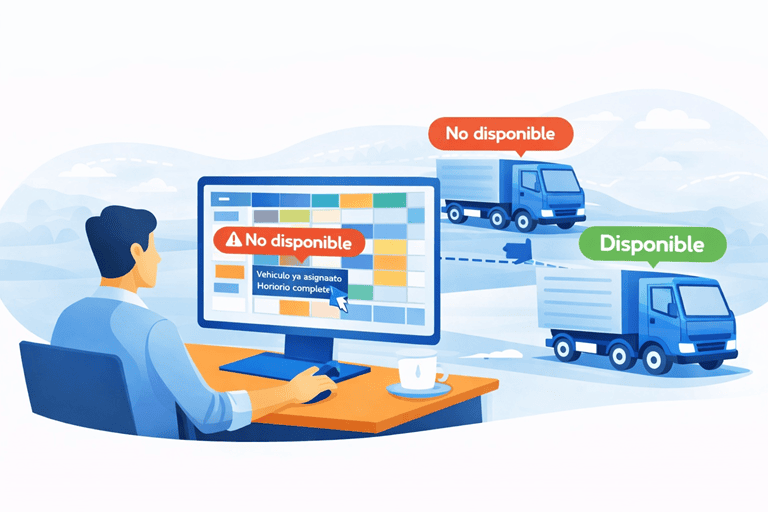
How to Avoid Vehicle Availability Conflicts in Logistics During Transportation Planning

vehicle availability in logistics_cover_01

In many logistics departments, vehicle availability directly impacts how the day's schedule is organized. The first question is almost always the same: what vehicles do we actually have available for today? At first glance, it seems like a simple question. The company has a defined fleet, the day's orders are clear, and… Read more

7 common mistakes in TMS implementation and how to avoid them

7 common mistakes in TMS implementation - Hedyla blog - homepage

Implementing a TMS is one of the most crucial steps in the digitalization of transportation. More and more logistics companies and carriers are opting to automate their operations to reduce costs, improve traceability, and better plan their routes. However, although the technology is available, not everyone manages to take full advantage of it. The reason is usually… Read more

Why is a modular transport solution the key to avoiding unnecessary costs?

Modular solution in transport - Hedyla blog cover

A modular transportation solution saves you unnecessary costs because you only pay for what you actually use, you can scale your system as needed, and you avoid training and maintenance complications. Many logistics and transportation companies encounter the same problem when digitizing: they end up contracting “all-in-one” software with features they never need… Read more

What is Smart Transportation and how is it revolutionizing the industry?

smart-transport-blog-hedyla-homepage

El transporte inteligente se ha convertido en uno de los pilares clave de la transformación digital en la cadena de suministro. A través de tecnologías como la inteligencia artificial, el análisis de datos en tiempo real y la automatización de procesos, las empresas de transporte están logrando mayor eficiencia, trazabilidad y capacidad de adaptación en … Read more

How does the Pull Model work in logistics and when to apply it?

freepik.es vector - Pull-in-logistics-cover model

La eficiencia en la logística y el transporte no depende únicamente de contar con una buena infraestructura o una flota moderna. También requiere una estrategia que alinee la operativa diaria con la demanda real del cliente. En este contexto, el Modelo Pull en logística se presenta como una alternativa eficaz para optimizar recursos, reducir costes … Read more

How are Micro Fulfillment Centers transforming last mile logistics?

freepik.es-micro-fulfillment-center-portada

A medida que los consumidores exigen entregas más rápidas y precisas, los Micro Fulfillment Centers (MFCs) se han convertido en una pieza fundamental para optimizar las operaciones logísticas en la última milla. Estos centros, diseñados para agilizar las entregas en zonas urbanas, no solo están transformando la manera en que se distribuyen los bienes, sino … Read more

How do 3PL and 4PL transform logistics for shippers?

freepik.com-3pl-y-4pl-portada

Las siglas 3PL y 4PL están cobrando cada vez más importancia en el campo de la logística, especialmente para los transportistas que quieren mejorar la eficiencia operativa y satisfacer las crecientes demandas del mercado. Pero ¿qué significa cada uno de estos modelos? ¿Cómo pueden beneficiar a los transportistas? En este artículo, analizaremos sus características, beneficios … Read more

What are the differences between primary and secondary transportation in logistics?

freepik.es - Differences between primary and secondary transport - homepage

For carriers, understanding the differences between primary and secondary transport in logistics is essential for optimizing resources and increasing efficiency. Each type of transport plays a specific role in the supply chain and requires different management approaches and strategies. Below, we define what each entails and present their… Read more

How to track shipments in real time and optimize operations?

freepik.com-seguimiento de envios-portada

Si bien el seguimiento de envíos en tiempo real no es una innovación tecnológica nueva, sigue siendo clave para la eficiencia logística en 2024. La capacidad de rastrear las ubicaciones de envío en tiempo real y adaptarse a las condiciones ha cambiado las reglas del juego en la industria del transporte hace ya varios años. Sin embargo, la verdadera innovación radica en cómo la tecnología evoluciona y mejora con herramientas avanzadas … Read more

What is the Net Promoter Score and what is it for?

freepik.es-net-promoter-score-01

El Net Promoter Score (NPS) es una métrica que mide la lealtad de los clientes hacia una empresa. Este indicador se ha convertido en una herramienta importante para las empresas que buscan mejorar la satisfacción del cliente y optimizar sus operaciones. En la industria de la logística, el NPS es especialmente importante porque ayuda a identificar … Read more

What is Radio Frequency Logistics and how does it work?

Image by vectorpouch on Freepik - radiofrequency-logistics-cover

La Radiofrecuencia Logística es una tecnología que utiliza ondas de radio para identificar y rastrear productos, activos y materiales a lo largo de la cadena de suministro. Esta revolucionaria herramienta ha transformado la forma en que se gestionan los procesos logísticos, brindando mayor transparencia y control en tiempo real. ¿Qué es la radiofrecuencia en logística? … Read more

What is EOQ or Economic Order Quantity and How is it Calculated?

EOQ cover

Effective inventory management is essential for any business that wants to maximize profits and minimize operating costs. In this context, Economic Order Quantity (EOQ) models emerge as an invaluable tool. In this article, we'll take a closer look at what EOQ is, how to calculate it, and its benefits and limitations… Read more

Everything you need to know about the digital delivery note

Close-up of hands pointing at the tablet - advantages of the digital delivery note photo

Document management is one of the activities within the logistics sector that requires a lot of circulation and agility in the preparation and presentation of paperwork. For this reason, as the demand in the transport of goods grows, it is already a necessity to digitize the processes and start applying the digital delivery note.

To better understand what a digital packing slip is, how it differs from a paper packing slip and what benefits it offers, read on to learn more.

What is a digital delivery note?

A delivery note is a document with detailed information about the products delivered that serves as documentary proof of delivery. It is the selling company that generates the document and keeps a copy for the customer or the receiving company to receive the original and check that everything is in order. 

What is the difference between a paper packing slip and a digital delivery note?

Traditionally, these documents were generated with office software, printed and delivered on paper to the customer, while the salesperson kept a copy.

In contrast, the digital delivery note is generated with various types of programs, for example, with a module within a logistics software. In addition to that they are signed with an electronic device such as a smartphone so that the delivery is confirmed and all data is well checked.

What are the advantages of the digital delivery note?

Faster and easier access to information

When important documents such as delivery notes are printed and photocopied, copies are often limited for the number of staff who have to file and manage them. This leads to the situation of spending a lot of time searching for the papers when they need to be rechecked.

In contrast, with a digital delivery note, all authorized personnel will have access to all delivery notes from their work devices and will be able to monitor when deliveries are signed and confirmed. Furthermore, the documents can be managed directly with specific software, such as a TMS.

Reduction of errors and avoidance of losses and damages

Paper documents are more prone to errors, since the process of generating them is more manual. Moreover, another major disadvantage of physical documents is that they can be lost or damaged, which causes a lot of problems in document management.

For this reason, with a module in the software that creates and sends digital delivery notes, it is more difficult to make mistakes because its management is more automated. In addition, there is no longer the fear of losing the delivery notes once they are inside the company's ERP.

Digital signature concept, cartoon vector illustration. Approved - advantages of a digital delivery note vector

Read more

How IoT and AI is making a big impact on the logistics sector

Entrega autónoma concepto abstracto ilustración vectorial - Cómo se usa el IOT y la IA en la logística vector

For several years now, IoT (Internet of Things) technology has been increasingly known and applied in different fields thanks to its increasingly reliable and complete technology. Undoubtedly, among the industrial sectors in which the use of IoT technologies is trending, the logistics sector stands out due to the growth it has experienced in recent years and the needs it entails. 

It is well known that all logistics operations require rigorous monitoring and agility to run efficiently, from supply chain management to last mile distribution. For this, one of the most popular solutions is IoT and digitization of certain operations in the logistics department.

In this case, in which logistics operations is IoT technology used specifically? If you want to find out how IoT and AI are used in logistics, read on:

Predictive analytics

It is one of the best known tools where both AI technology and IoT are used. It consists of using previously collected data to forecast future results and, to do so, it organizes the data obtained, preprocesses them and develops predictive models so that the results can be validated later.

The advantages of applying predictive analytics to the logistics sector are varied. Some of its most frequent uses are:

  • Demand forecasting: We analyze the sales history together with the market and estimate the sales that would be generated on the products.
  • Supply chain planning and optimization: Thanks to a prior analysis of the demand, the right quantity and timing of the production of the goods can be calculated.
  • Inventory optimization: Demand estimates help in making decisions about optimal stock levels for each type of inventory.
  • Improved resource management and savings: By applying current data taking into account constraints and other characteristics, it is possible to optimize resources and reduce operating costs.

In general, predictive analytics act as a guide for decision making and to give us a more accurate estimate of future activities. In this way, a clear view of the current and future situation of the supply chain and company is obtained.

Real-time shipment tracking

The most important and essential thing that customers ask for today is transparency in reporting the status of the order in real time to ensure that it arrives at its destination at the agreed time without incident. Today it is possible to receive all the data thanks to geolocation algorithms received by sensors via wireless networks.

The advantages of order tracking focus on estimating delivery times and detecting and solving problems. For example, if an order is not going to arrive on time or has been lost due to a wrong address or accident, the incident can be solved as soon as possible or an alternative can be offered to the customer.

Mujer joven tomando fotografías de cajas de entrega - Cómo se usa el IOT y la IA en la logística foto

Read more

How can carriers and delivery drivers be helped with a voice assistant?

Woman using her phone while driving. Helping drivers with a virtual assistant (photo)

En uno de nuestros webinars se ha hablado sobre cómo facilitar la vida de los transportistas con un asistente virtual. En él, Gandolapp y Washa Logistics han debatido sobre las condiciones que viven los transportistas y repartidores actualmente y cómo, con un asistente virtual, se vería beneficiado su desempeño laboral. Dicho tema nos resultó muy … Read more

3 questions most frequently asked by customers about the supply chain

Business people using a digital tablet. Frequently asked questions about logistics modules.

More and more companies are betting on the digitization of their logistics processes in order to optimize costs, obtain visibility of the movement of goods, improve communication between staff, among others. The different logistics solutions on the market can focus on a single function or can come with several modules.

However, there are a number of questions that customers interested in Hedyla software often ask about lesser-known integrated modules that complement more complete solutions such as a TMS or route optimizer. What in particular do these modules consist of and how are they helpful?

If you want to learn more about the logistics software modules less known by the market, read on.

Digital Twin

As its name suggests, the Digital Twin is a physical representation of any object or process to be replicated. In this case, it is used to create simulations of delivery routes, either in route optimizer or in the TMS.

In order to create the digital twin, it is necessary to collect data from the company's historical routes. It is useful to contrast them with the optimized routes based on the applied operational and business constraints. In this way, you can see the changes that will be applied to the new delivery routes and the time and resources that will be required to implement them.

The scenario simulator is also used for consulting projects for scenario analysis. In this way, changes in the supply chain and production lines can be better evaluated, such as analyzing the location of new logistics centers, among others. Its main function is to make better decisions based on productivity, efficiency and costs.

Vector illustration of the concept of partnership. Frequently asked questions about logistics modules.

Read more

4 challenges your company must take into account when installing a TMS

Isometric warehouse building with delivery truck. Challenges when installing a TMS

As new logistics software solutions are being created to improve part of the supply chain processes, there are also challenges or mistakes that are often made in the use and installation of a TMS system. While it is true that more and more companies are taking the step to digitize and optimize transportation management, it is possible that operations are not performing as well as expected.

Se queste irregolarità non vengono affrontate, si perde la fiducia nel sistema di soluzioni logistiche, con conseguente insoddisfazione dei clienti e dell'azienda. Quindi, quali sono gli errori o le sfide più comuni quando si implementa e si applica efficacemente un TMS? Va notato che si stima che tra il 20% and 30% of the companies actively use a TMS.

If you want to know the most common challenges when installing a TMS and using it effectively, take a look!

Data collection

One of the challenges in installing a TMS that are also important and notable in the supply chain is that logistics operators and carriers are not yet able to reconcile their data. Such a challenge poses a problem in case there are service failures that have not yet been detected.

It is evident that every company in every part of the supply chain collects separate KPIs or SLAs from those that are stored on their own servers and systems. By the time dashboards are made for analysts or errors are reported via e-mails or spreadsheets, the information received is usually not accurate and the process is very tedious.

Therefore, it is important that the TMS or other similar software such as an ERP be able to collect and share data from both operators and carriers, avoiding irrelevant or erroneous information. However, it is recommended that such sharing can be done as smoothly and efficiently as possible, avoiding delays that cause misinformation about the status of transport.

Revisione della strategia

Before considering installing a TMS, as with any project, it is essential to establish a solid and realistic strategy in order to assign coherent objectives related to this action. In addition, all documents on departments, carriers, among others, must be updated and in order to start implementing them in the TMS.

However, it is possible that the TMS may begin to show unsatisfactory results or detect more frequent and more serious errors. In the event that the TMS does not have many problems collecting accurate information, one of the most likely cases is that the current strategy has become obsolete due to internal company or external changes affecting a large part of the industry.

In such a case, the established strategies and objectives should be revisited to see if they fit with the current landscape. If inconsistencies are detected, the strategies and objectives need to be redirected. An example would be if there have been very large changes in fleet volume, either a reduction or expansion of vehicles and carriers.

Fleet management. Challenges when installing a TMS

Read more

How has AI been successfully applied in the supply chain?

examples of artificial intelligence in vector logistics

Artificial Intelligence is known to be a growing trend in many industries around the world. And it is no mystery when logistics and transportation are looking for ways to apply such technology for the improvement of all their operations within the supply chain. From back office solutions to IoT control solutions, there are several examples of artificial intelligence in logistics.

However, for people who are not deeply involved in the industry, it is not very clear to them what specific operations AI is involved in. What are the current supply chain issues for the supply chain to be optimized with AI? And what advantages does this technology confer over the competition?

If you want to learn how AI is being applied in supply chain management with these examples of artificial intelligence in logistics, take a look!

Warehouse automation

Sectors such as e-commerce have gained much relevance in recent years, so the increase in demand and the need for a more efficient storage management call for a solution. For this reason, there has been a notable trend in warehouse automation as one of the notable examples of artificial intelligence in logistics.

Warehouse automation encompasses various operations, from the application of automated storage systems with stacker cranes to warehouse management software. Within it, they use data analysis and demand forecasting to coordinate various processes in the warehouse.

And not only do they perform this step, but they synchronize the tasks of both the operators and the automated systems. In this way, personnel can focus on other tasks.

Inventory control

This operation usually goes hand in hand with warehouse automation and, it seems, is going to be an essential element for companies. Currently, it is known that the volume of shipments is dropping considerably due to inflation, as a result of which stock is accumulating and will take longer than desired to accumulate in the warehouse.

First, the warehouse is stocked with the right amount of inventory according to demand prediction based on previous sales, market analysis, among others. Then, automation systems would be unified with catalog control to improve stock visibility by alerting on low stock levels and detecting defective products and packaging before they are shipped via AI cameras or sensors.

Thanks to one of the examples of artificial intelligence in logistics, it is possible to reduce error margins and time spent on tasks, obtaining high customer satisfaction and competitive advantage over other companies where logistics plays a crucial role.

Primer plano de un ordenador portátil que ejecuta un algoritmo que analiza el código en el escritorio frente a los programadores que trabajan en equipo - ejemplos de inteligencia artificial en la logística foto

Read more

4 Logistical decisions to be made by Artificial Intelligence

Illustration of a robot face concept. Vector illustration of the logistical decisions that artificial intelligence will make.

Whether in the digitization of processes or digital transformation, artificial intelligence is increasingly present among companies in any sector. But logistics stands out, as companies today seek to streamline their digital operations and/or change their strategy to meet current industry demands, looking for the best logistics decisions that Artificial Intelligence will make.

There are currently many options and tools with AI on the market that, rather than offering a magic solution to all problems, help in the management of the most complicated processes and assist in making decisions in the face of difficult challenges to solve. Some of them have already been heard a lot about due to their recent use in large companies, but others are not so well known.

The following are the types of logistics decisions that Artificial Intelligence will make in both operations and strategy.

Demand forecasting

It is no mystery to know the most popular peak demand times such as Christmas or Black Friday, when most industries are affected. However, each sector and, in particular, each company knows its own order increases in more or less detail depending on the times and data from previous years, among other aspects.

Despite this, the optimal number of stock is not always right in order not to suffer losses due to excess or broken stock due to its incredible complexity determined by both external and internal factors. That is where AI comes in to plan demand based on algorithms that calculate previous years, marketing campaigns and even taking into account some external circumstances such as changes in laws.

Reverse logistics costs

Reverse logistics is known to be one of the biggest challenges for a company running a supply chain. This is because the cost of a return is much higher than that of a shipment because it is not only a matter of bringing the product back to the warehouse. It is not only a matter of bringing the product back to the warehouse, but also a rigorous administrative management to reintroduce it to the active stock, repair it if necessary, or destroy it if the previous steps cannot be applied.

At this point is when Artificial Intelligence comes in to make decisions based on several criteria, but whose main objective is to assess whether to process the return of the order or not. To do this, the AI takes into account such obvious factors as the cost of the refund, but also other not so obvious ones such as the condition of the product to consider its resale and even the buyer's history to analyze his behavior with the brand.

Once these facts have been analyzed, the AI can make two decisions: either not to process the return, but to pay the customer if the costs are not profitable, or to process it when the losses are not so serious for the company's economy. Not forgetting that the dissatisfied consumer is also analyzed in terms of his brand loyalty and whether he will be penalized for processing too many returns.

Man using a digital assistant on his tablet. Logistical decisions that artificial intelligence will make.

Read more

Route planner and Google Maps

planificador-de-rutas-y-google-maps-Foto-de-Personas-creado-por-lookstudio-freepik

Normalmente se cree que, para tener un planificador de rutas eficiente, se necesita un programa informático de alto presupuesto. Sin embargo, puedes tener la solución aquí mismo, en tu smartphone u ordenador. Basta con abrir Google e ir a su apartado Maps.

We are talking specifically about its route planner function and, relatively recently, adding stops to that path. It's not exactly new because it was created in 2016, but it can be of great use for delivery routes.

Tips for using the route planner

If you want to know how to get the most out of this familiar route planner, here are the tips that may be useful:

1. Set departure time or arrival time.

Most users who open the application create their route based on the actual time. However, Google Maps also gives us the option to change the date of departure or arrival, giving us room to start planning and arrive on time.

This proves to be very advantageous to get more information about certain roads and highways on which we may encounter setbacks more frequently. Apart from the fact that all possible routes are known in advance by means of the route planner.

2. Use several stops

Not only can routes be created from point A to point B, but it is possible to add multiple stops along the way and optimize in the process.

Although this function is widely used by tourists who want to make a customized tour, it is also very useful for transport and logistics. In this way, additional drop-off and pick-up stops can be added to generate the best delivery route.

3. Consult regular or real time traffic

Once the route is prepared, additional information may appear that can be very helpful. The traffic consultation on the routes may be one of the most useful tools of this application.

The traffic level is colored from green (very little traffic) to dark red (a lot of traffic) to better interpret the main routes and other alternatives.

Read more

What software is used in logistics?

What software is used in logistics?

Logistics software are all those digital solutions that allow you to manage, control and optimize the different logistics processes from both a strategic and daily operational point of view. In order to be prepared for today's needs, it is important to know what software is used in logistics nowadays.

Logistics is complex as it integrates a multitude of activities with many actors involved. Likewise, logistics has a great connection with the rest of the company's activities and, therefore, is affected to a great extent by decisions and situations derived from other factors that are not properly logistical, such as sudden changes in demand, new products launch or expansion to new territories, among many other examples.

The digitization is currently a key aspect for the future of companies of all sizes. However, the complexity of logistics mentioned above is also visible in the variety of types of software for logistics, or that have a direct relationship with it, for example systems for supply chain management or company management (ERP).

Logistics software

In addition, each type of software also has notable differences from others that are in exactly the same category. Therefore, it is necessary to go beyond the category and see the functionalities that each system offers to know exactly whether or not it adjusts to the needs of each company.

Read more

7 women forerunners in technology

Mujeres-precursoras-tecnología-top-secret-rosies

Cuando nos referimos a los inventos de la tecnología los primeros nombres que nos vienen a la cabeza son Leonardo da Vinci, Alexandrer Graham Bell, Nikola Tesla, Thomas Edison, Steve Jobs, Elon Musk, entre muchos otros y todos ellos hombres. Pero desconocemos el papel que la mujer aquí ha jugado, qué inventos ha llevado a … Read more

Balancing cost and quality of service in last mile distribution

Cost vs Quality of Service Balance in Distribution

La distribución de última milla tiene un objetivo muy simple: mover bienes desde un almacén o hub hasta su destino final. Pero, de ser tan simple, no serían necesarios ni expertos en logística ni ningún software de optimización. Los factores más relevantes a la hora de planificar la distribución son las restricciones y el entorno, la calidad … Read more

Why delivery companies need fleet optimization algorithms

Seguimiento de rutas de reparto

¿Por qué las empresas de reparto necesitan algoritmos de optimización de flotas? Durante los últimos diez años, el comercio electrónico ha cambiado la forma en que las personas esperan recibir sus compras en línea. Actualmente, cuando un usuario compra un artículo en línea, espera que la entrega sea rápida, fiable y gratuita. De esta manera, … Read more